
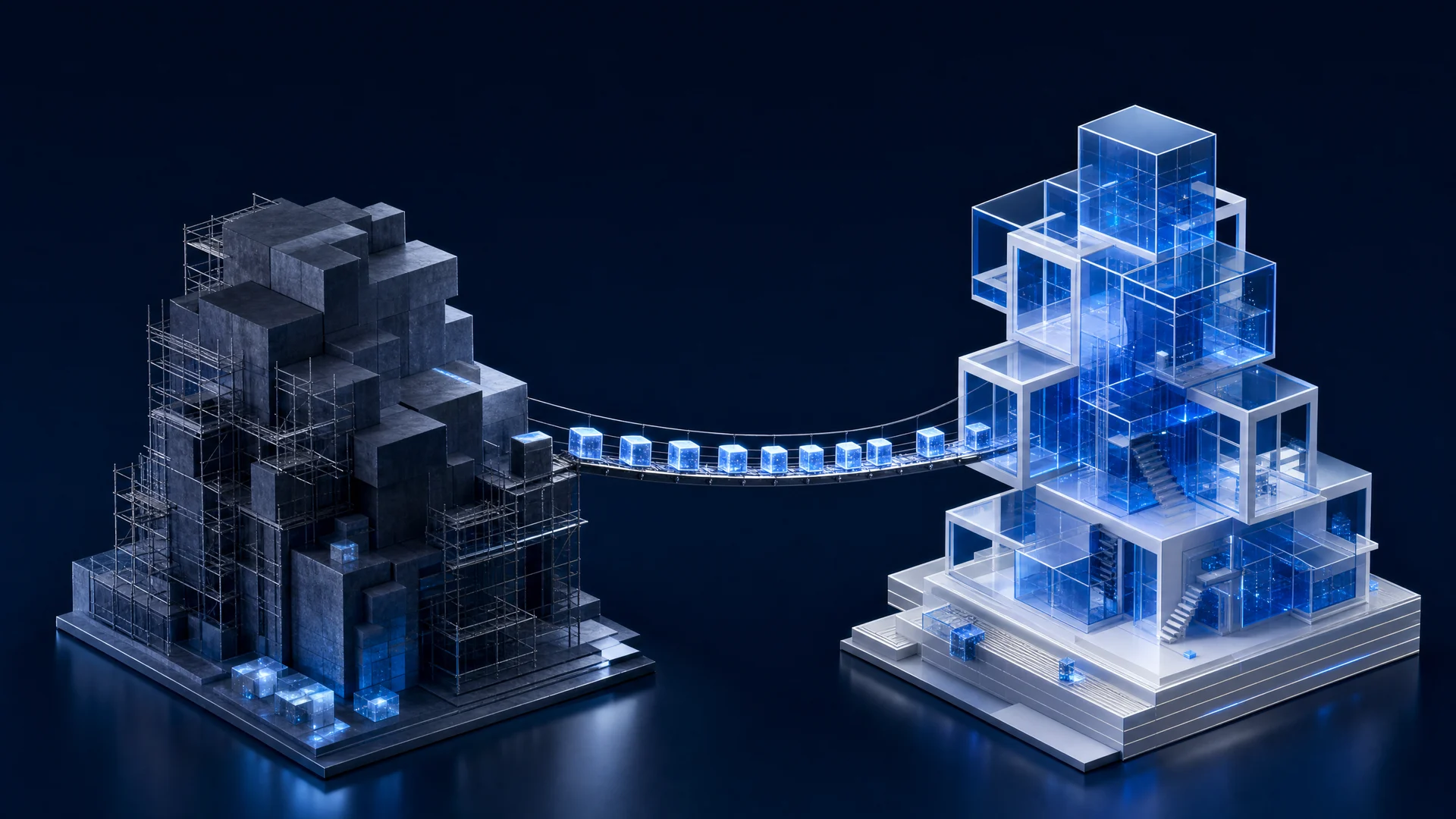
A modernization that starts because the screens look dated often reaches into data structures and operating procedures as well. To keep design and development aimed at the same goal, we first look at the current work and service flows.
01. Look at user and operator flows together
Map how visitors find information alongside how staff update it. Once you see which approvals and processing steps users’ inquiries, applications, and lookups go through internally, screen priorities become clear.
Adding more menus does not by itself make information richer. Decide which question users should be able to resolve on each page, and design paths that lead to the next action.
02. Map the connected systems
Identify everything connected to the current service, such as membership, payments, settlement, notifications, and internal work tools. For each type of data, document the system of record, how it is transferred, when it is called, and who handles errors.
Agree on which existing interface specifications must be kept and which will be newly defined. Check early whether a real test environment and sample data are ready.
What to prepare
- Systems to connect and data owners
- Authentication, permissions, and the data fields to transfer
- Procedures for errors, reprocessing, and status checks
03. Treat data migration as a separate workstream
Data from an older system may not connect directly to new screens. Check for duplicates, gaps, format differences, and retention rules, and agree on what to migrate and what to leave out.
Set the criteria and the owner for checking migration results, and work out how to bring in data that changes around go-live. The build scope may change depending on how clean the actual data is.
04. Plan for verification and go-live
Beyond screen reviews and feature verification, test scenarios that carry real work through to the end. Include the flow for each permission level, integration failures, input errors, and mobile environments in the scope.
Before go-live, prepare content entry, account setup, staff briefings, and incident contact paths. If a phased transition is needed, agree on the rollout order and the criteria for checking each phase.
05. Hand over work that operators can maintain
The results of a modernization are not only in the screens and code. Documenting interface definitions, operating guides, test results, and the change history helps with later feature expansion and staff handovers.
Agree on maintenance and feature enhancement as separate scopes. Set regular improvement items, emergency response procedures, and request management to fit the project’s operating conditions.
That’s all you need before a consultation.
If you prepare the items below, we can align on scope more quickly in early discussions. Even if not everything is ready, we can start with your current situation.
- Work scenarios for key users and staff
- List of existing systems and external integrations
- Data to migrate and verification criteria
- Content management and operating permissions
- Maintenance and improvement scope after launch
KPS project guide · The specific technical setup and conditions depend on your requirements.